All posts in “News”

Health Districts | Key Lessons for Municipalities and Partner Health Care Organizations


Crossposted from the National Resource Network
By:Todd Fawley-King, Caroline McCarthy, and Judith Taylor


Our recent publication –Striking a (Local) Grand Bargain – explores how municipalities and anchor institutions can substantially increase community stability, economic competitiveness, and health outcomes when they jointly establish a shared long-term community vision and coordinate policy and investments. For cities with large anchor medical institutions, successful health districts integrate medical facilities into mixed-use neighborhoods to support economic, social, and community health goals.


The City of Lancaster, California is planning for a new health and wellness district and would like to create a partnership with the Antelope Valley Hospital. The National Resource Network provided in-depth case studies of other health districts in similar cities to help Lancaster understand the scope and key elements a health district should include, as well as the potential impacts. In addition, the Network drew on experience planning for healthy communities, including a health district plan for Meridian, MS, and implementation support for a healthy campus in Kansas City, KS. From this research, we have identified several key lessons that may be applicable to other cities considering similar districts.


Formal “initial thinking” in collaboration between a municipality and an existing health care institute is a common element of the successful health districts studied.


The health institutions that formed the nucleus of these successful health districts and the municipality often conducted preliminary planning or collaborative work to form and strengthen their partnerships, which then helped increase stakeholder interest in the investment and effort needed to form the district.


Health districts can coordinate development among individual institutions to efficiently maximize capital resources, share the burden of infrastructure improvements, and support ambitious projects.


Health districts may be especially useful in cities with multiple large medical anchor institutions that have similar investment and infrastructure needs. The dialogue inherent in the formation and maintenance of the health district plan can facilitate creative approaches to finance and encourage shared responsibility of infrastructure upgrades benefitting multiple stakeholders. This process may also encourage the formation of a political coalition necessary to champion ambitious projects and access diverse funding options such as state or federal grants.


There are several challenges that can hinder collaboration and realization of a successful health district.


Notably,partnerships between institutions with similar market aspirations can be tenuous, especially when the economy contracts. Establishment of a health district where the key members are competing institutions may be challenging; a health district with complimentary facilities may result in greater collaboration and success. In addition, changes in the leadership of the municipality can derail a project that is led primarily by the public sector, making it important to carefully consider what entity should lead the initiative.


The right leadership can ensure continued relevance of the plan and support for long-term objectives.


Most cities that pursue a health district must choose between a public-leadership of the initiative or assigning a separate non-profit entity to lead. Public-led health district initiatives require long term city commitment and consideration of how to maintain focus during leadership changes.  For some cities, a non-profit coordination organization may be best suited for the lead role because a specially-designated entity can focus and steward the resources necessary to coordinate institutional planning, effectively represent public and private interests, and access financing opportunities such as grants. Additionally, a designated non-profit coordination organization can add dedicated implementation capacity and help maintain focus on the objectives of the plan during leadership changes. However, in considering creating a non-profit coordinating entity, stakeholders must ensure the organization will have sufficient resources to support itself and its mission. Possible revenue sources may include philanthropic support or revenue from assets in the district the non-profit could manage.


Successful health districts are comprehensive and actively involve all nearby landowners.


Instead of focusing narrowly on the municipality and the medical institutions, successful health districts reach out to all landowners to create a comprehensive vision for the future of the community. This expansive view is necessary to secure widespread community support and better targets the full range of investment by all stakeholders in the district towards achieving the long-term goals and objectives.


Cities should actively pursue partnerships with potential new anchor institutions while preparing a master plan.


Attraction of new anchor medical institutions to a district is a clear sign of the success of a health district masterplan. Cities have a valuable opportunity during the preparation of the plan to incorporate attractive policies and incentives and thus should reach out to potential anchors during the preparation phase to understand what cost-effective incentives, infrastructure upgrades, or policies might induce new institutions to locate in the planned health district.


Health districts are powerful long-term strategies that require considerable investment of time to develop and maintain. Municipalities considering a health district should assess the resources and institutional capacity necessary to partner productively with a medical institution to make a health district a reality. To ensure success, cities that choose to pursue a health district should carefully consider how to apply the key lessons identified here, and also review the Network’s report on collaboration between municipalities and their anchor institutions.

District-Based Development Finance – Tools that Work

Header Image


On November 19th, HR&A Partner Paul Silvern will moderate a panel discussion on the powerful district-based financing tools and mechanisms being used to help communities concentrate development opportunities into targeted areas at the Council for Development Finance Agencies (CDFA) California Financing Roundtable Conference. Paul will be joined by a panel of banking, financial, and economic professionals who have utilized district-based financing tools including community facilities districts, assessment districts and infrastructure financing districts. The discussion will explore various approaches, rationales, and best practices when preparing for district-based financing.


For nearly 30 years, Paul has assisted public and private clients across California and other western states by creating real estate development and financing strategies that catalyze private investment to improve cities. He co-directed the creation of a citywide economic development strategy for the City of Los Angeles, co-directed the analysis and identification of potential new funding sources for the Portland Development Commission, and has been assisting the City of Concord to implement a major mixed-use reuse plan for the former Concord Naval Weapons Station. He also provides guidance to a wide range of public agencies on implementing strategies and programs to fund development of affordable housing. . His clients include private development organizations, institutions, local governments, and metropolitan planning organizations.


The CDFA is a national association dedicated to the advancement of development finance concerns and interests. CDFA is comprised of the nation’s leading members of the development finance community representing public, private and non-profit development entities. The conference is co-sponsored by CALED, California’s leading organization of economic development professionals.


HR&A is a proud sponsor of the conference and encourages colleagues and clients to register and gain valuable economic development finance insights. We look forward to seeing you on November 19th.

HR&A Partners Speak at Greenbuild in DC

greenbuild2015-2


HR&A is proud to participate in the annual Greenbuild International Conference in Washington DC in November 2015. Greenbuild is the world’s largest conference dedicated to green building and sustainability where thousands of industry leaders come together to exchange ideas. HR&A Vice Chairman Candace Damon and Senior Principal Jamie Torres Springer, will both participate in panel discussions at this year’s conference.


On November 18th, Vice Chairman Candace Damon will discuss implementation of green stormwater systems with Craig Holland, Director of Product Development at NatureVest, the impact investment unit of The Nature Conservancy, and Mikel Wilkins, Green Infrastructure Practice Leader at Verdunity. The panel, titled Implementing District Scale Recreational Stormwater Systems, will investigate the economic, logistical, institutional, and cultural frameworks of green infrastructure implementation. The panelists will discuss hurdles, which prevent widespread implementation and successful employment of innovative strategies. The speakers will draw on past HR&A work including economic assessments of a district stormwater system within the proposed Southwest EcoDistrict in Washington DC, proposed changes to the City of Detroit’s stormwater policies, and green infrastructure retrofits within Dallas’s park system.


On November 20th, Senior Principal Jamie Torres Springer will discuss Superstorm Sandy recovery with Kate Dineen, Deputy Executive Director at the New York State Governor’s Office of Storm Recovery (GOSR), and Danielle Arigoni, Acting Director, Office of Economic Resilience, U.S. Department of Housing & Urban Development. The panel, titled From Recovery to Resiliency, will explore the various approaches undertaken in the Northeast following Superstorm Sandy to create enduring strategies and plans for resilience. Topics will include: initial steps to rebound post-storm; techniques for establishing a long-term focus on preparing for and protecting against impacts of climate change; development of responses spanning critical infrastructure areas and built environment typologies; provision of rebuilding and revitalization assistance; and collaboration with community members and local leaders. Case studies will draw upon various resilience efforts in the northeast, of which HR&A has been involved, starting with Jamie’s post as Deputy Director of City’s Special Initiative for Rebuilding and Resiliency (SIRR), our work in ten communities in NYC for the State’s NY Rising Community Reconstruction Program, and significant participation on three teams of HUD’s RBD Competition.


HR&A is a proud supporter of the United Stated Green Building Council and we look forward to engaging with attendees at this year’s Conference. Please reach out to Jamie Torres Springer or Candace Damon if you plan on attending – we would love to connect.

Jamie Torres Springer Weighs in on the Future of Midtown West at the MAS Summit

22781773186_cacec639a5_o (1)

Jamie discusses considerations involved to achieve a new Penn Station with Vishaan Chakrabarti of Partnership for Architecture and Urbanism (PAU), and Kate Ascher of BuroHappold. Image courtesy of MAS/Giles Ashford.


On Thursday, October 22, HR&A Senior Principal Jamie Torres Springer joined Kate Ascher, Partner at BuroHappold, and Vishaan Chakrabarti, Founder and CEO of the Partnership for Architecture and Urbanism, for a session at the two-day 2015 MAS Summit for New York City at the TimesCenter. Vishaan moderated the discussion, “Getting a New Penn and Gateway Build: Rails, Regs, and Resources,” with questions for Jamie and Kate about reimagining Midtown West—namely by rebuilding Penn Station and strengthening regional transit access. The speakers recognized the difficulty presented by the multiplicity of ownership rights and underscored the necessity of convening different political players to reach consensus on funding and placemaking and of representing competing stakeholder interests. The session addressed the potential benefits of an upgraded Penn Station area in relation to both the City’s brand and wider-reaching neighborhood- and district-level impacts, including expanded regional transit capacity.


With these benefits in mind, Jamie discussed the value capture made possible by higher rents and additional taxes accompanying from existing and new development stimulated by district infrastructure improvements. He deemed Midtown West, which currently underperforms relative to other Manhattan districts, a neighborhood with room for significant economic growth. Jamie referenced ongoing transit-oriented redevelopment in the U.S. and Canada to demonstrate the centrality of government as a funding source, comprising more than half of capital funds in most cases. The session, available for viewing courtesy of MAS, reflected one of the Summit’s priority discussion topics: grappling with possibilities for the future of Midtown West.

Four HR&A Projects Awarded by the American Society of Landscape Architects

ASLA awards


We’re delighted to announce the American Society of Landscape Architects’ (ASLA) selection of four HR&A projects for national and local awards in the last year. On the national level, ASLA recognized the Penn’s Landing Redevelopment Feasibility Study with an Award of Excellence in Analysis and Planning and the Lawn on D with an Honor Award in General Design. HR&A was also recognized by the Arizona Chapter of ASLA for the design concept of Mesa City Center and the Master Plan of Hance Park in Phoenix. These projects reflect the firm’s steadfast commitment to the continued development of the American city.


HR&A provided development advisory and market analysis for the Penn’s Landing Redevelopment Feasibility Study, this year’s recipient of the ASLA’s Award of Excellence in Analysis and Planning. The study explored the feasibility of constructing a signature park at Penn’s Landing on the Delaware Riverfront, anchoring new development at the water’s edge and strengthening links with adjacent Center City neighborhoods. Working with a multidisciplinary team led by Hargreaves Associates, HR&A evaluated the market potential of the 45-acre site; recommended a flexible, preferred development scenario to create the park as well as almost 2 million square feet of mixed-use, waterfront development. HR&A also supported creation of a phasing plan to leverage near term development opportunities and infrastructure improvements that would catalyze further private development. HR&A’s work built off of work supporting a master plan for seven miles of the Delaware River waterfront, which identified Penn’s Landing redevelopment as an essential first phase.


©Christian Phillips Photography

©Christian Phillips Photography

The Lawn On D, a highly programmed outdoor space and event venue located in Boston’s burgeoning Innovation District, was recognized with this year’s Honor Award in General Design. Since its 2014 debut, the 2.7-acre open space has generated excitement throughout Boston as a surprising and delightful hub of activity that provides free, public programming for children and adults. HR&A, with the support of Chris Wangro, managed the programming and implementation of this significant placemaking project, which is helping to brand a new neighborhood around D Street next to the Boston Convention and Exhibition Center. Working with the Massachusetts Convention Center Authority (MCCA), HR&A established a distinct vision to achieve a sense of place that is defined by flexible programming, interactive environments, and compelling design. Serving as a business planning advisor and program manager to the MCCA through the conclusion of its 2015 season earlier this month, HR&A oversaw the execution of a calendar packed with festivals, concerts, movie screenings, interactive art installations, and more.

Image courtesy of West 8 + Colwell Shelor + Weddle Gilmore

Image courtesy of West 8 + Colwell Shelor + Weddle Gilmore

As part of an interdisciplinary team led by West 8, Colwell Shelor, and Weddle Gilmore HR&A was selected to transform the Mesa City Center, 18-acres surrounding Mesa City Hall, into a unique civic space that will enhance Mesa’s downtown and catalyze real estate development. The resulting design received an Honor Award in Analysis and Planning from the Arizona Chapter of ASLA. HR&A worked with the design team, the City, and key stakeholders to identify preliminary economic development opportunities and investment priorities, and is now developing a refined capital funding and phasing plan, an O&M funding and management strategy and an economic impact narrative.


Courtesy of !melk

Courtesy of !melk

As part of an interdisciplinary team lead by Weddle Gilmore and !melk, HR&A was engaged by the City of Phoenix to develop a business plan for the revitalization of Hance Park, an underutilized 32-acre park at the heart of Phoenix’s downtown art and culture institutions. The team’s design was recognized with an Honor Award in Analysis & Planning by the Arizona Chapter of ASLA. Over a period of 8-months the Master Plan Team organized a 3 tiered analysis and planning process, encompassing a deep analysis and investigation that revealed undiscovered history, examined connectivity and circulation patterns, and studied adjacent economic development potential. The team incorporated the core values of economic growth, sustainability, programming, and identity to create a sustainable vision for a vibrant and connected downtown signature park. HR&A developed an approach to capital funding, operations and maintenance funding, governance, and phasing for the revitalized park. HR&A is currently assisting the design team in developing a refined capital and O&M funding strategy for the first phase of park development.


HR&A is committed to increasing the vibrancy and vitality of urban life, and continues design creative, successful development strategies for our public and private clients. We’d like to extend our sincere congratulations and thanks to everyone involved in these projects.

Financing Strategies for “Disaster Resiliency”

Header Image


HR&A Senior Analyst, Theresa Cassano participated in a panel discussion entitled “Trending Topic Workshop: Disaster Resiliency” on Friday, November 6th hosted by the Council for Development Agencies. Over the past decade, extreme weather events have caused major catastrophes to cities large and small. From vulnerable energy grids to aging infrastructure, communities are susceptible to disasters in multiple ways, and the aftermath of the clean-up and redevelopment can affect a region for years. Theresa provided valuable insight as the panel explored financing programs and mechanisms for disaster resiliency, partnerships and collaborative efforts and identified financing solutions, and lessons learned from communities that are in the rebuilding process.


As a key member of HR&A’s resiliency and housing practices, Theresa drew upon her experience working on behalf of The Rockefeller Foundation where she was an integral part of the program team that implemented a Capacity Building Initiative to support the U.S. Department of Housing and Urban Development’s National Disaster Resilience Competition. Theresa assisted in the management of direct technical assistance to aid applicants in development of strategy and project proposals and supported the delivery of seven resilience academies across the county.


HR&A works with public, private, and nonprofit leaders to address physical, social, and economic resiliency with a focus on implementable solutions. HR&A Advisors has extensive experience in resiliency planning, including leadership of the planning process in eight NY Rising Community Reconstruction Program communities on behalf of New York State, and through participation in the innovative HUD Rebuild by Design Competition. We have provided key economic framework guidance for resiliency efforts and a public-private approach to implementation that draws on project value for funding. In the months and years ahead, HR&A is committed to working with partners across all sectors to learn from our common experiences and to design and implement strategies that promote resiliency in urban places over the long-term.

HR&A Speaks at the American Society of Landscape Architects 2015 Conference

Header Image


Whether we are crafting funding strategies for urban parks or developing resilience plans for coastal cities, HR&A works with a wide range of clients and communities to provide implementable solutions that protect and enhance the built environment. This November, Vice-Chairman Candace Damon and Senior Principal Jamie Torres Springer will moderate panels at the American Society of Landscape Architects (ASLA) 2015 Annual Conference in Chicago, where they will discuss these topics with diverse groups of panelists.


On Sunday, November 8th Jamie Torres Springer will moderate a panel titled: Landscape Architecture and Design Post-Sandy: New Paradigms of Resilience. This panel will be comprised of planners and landscape architects who will discuss principles of landscape design and planning as they relate to disaster recovery and resilience. Jamie leads HR&A’s resilience practice and specializes in creative planning, financing, and implementation strategies supporting urban growth and revitalization.


On Monday, November 9th Candace Damon will moderate a panel titled: Public Parks and Private Partners: United they Stand?. She will be joined by park operators, consultants, and advocates to explore and debate the P3 role in park funding, policy, and operations, and what the implications are for designers. Candace is a leader in the creation of sustainable urban redevelopment strategies for cities across North America and spearheads HR&A’s Parks and Open Space practice.


We look forward to sharing lessons from our projects and hope to foster a lively discussion among ASLA attendees. We hope that you can join us!

City of Norfolk Releases Innovative Resilience Strategy

cities-norfolk_optimized

In October, the City of Norfolk released its 100 Resilient Cities resilience strategy, which will transform Norfolk through initiatives to make the coastal city more prepared for climate change, create economic opportunity in new and growing sectors, and strengthen communities and neighborhoods while deconcentrating poverty. The strategy breaks the mold of traditional planning efforts, aligning actions and investments by 75 partners from the private, public, and non-profit sector. The Virginia Pilot covered the release.


HR&A proudly supported the City with project management and economic analysis as it prepared its strategy. We have assisted the first three cities in the 100 Resilient Cities’ network to complete plans – Norfolk, New York City and New Orleans – and are working with six other cities – Boston, Boulder, El Paso, Los Angeles, Tulsa and St. Louis – on their strategies.


The strategy is a milestone in Norfolk’s work with 100RC, a global initiative pioneered by the Rockefeller Foundation to help cities develop comprehensive, actionable strategies to become more resilient in the face of current and future social, economic, and physical risks and challenges.

HR&A Selected as the Lead Consultant for Imagine Boston 2030

HR&A Imagine Boston


HR&A is proud to announce our selection as lead consultant for Imagine Boston 2030, the comprehensive plan that will define a vision for the future of Boston leading up to its 400th birthday. HR&A will lead an interdisciplinary team of planners, designers and engagement experts, including planning and design partner Utile Architecture + Planning, to develop and deliver Boston’s first citywide plan in 50 years.


“A successful civic engagement component for Imagine Boston 2030 is critical to creating a future for the City that incorporates all of our residents. HR&A and Utile appreciate the diversity of Boston’s people and their viewpoints, and they will help us build a stronger city that’s grounded by ideas from the people of Boston.”

–Mayor Martin J. Walsh


Imagine Boston 2030 will provide opportunities for residents to inform and shape citywide conversations about quality of life, and develop implementable ideas to address the city’s biggest issues. A team of community engagement experts will ensure proactive involvement from diverse constituents through a variety of innovative community engagement channels, ranging from social media and mobile polling to in-person conversations convened and led by local organizations.


Guided by feedback from residents and City staff, HR&A and its strategic planning partners will develop a vision plan with goals for the future of Boston’s positive physical change, shared prosperity, coordinated public investment, and a healthy environment and population. The team will work with residents and the City to develop implementable, placed-based initiatives, including identifying timelines, targets and funding sources for attainment of plan goals through 2030 and beyond.


HR&A is honored to help plan the future of one of America’s most well-loved cities, and we’re ready to imagine the possibilities of Boston in 2030. Follow Imagine Boston on Twitter @ImagineBosInstagram, Facebook and our blog.


Phillip Bush Joins HR&A’s D.C. office as a Principal

HR&A expands our leadership team in Washington DC with the addition of Phillip Bush as Principal.


“We gladly welcome Phillip Bush to HR&A. Phillip is a nationally-recognized leader in community development and resilience planning. His presence expands our capacity to meet the needs of our clients.”
– John Alschuler, Chairman


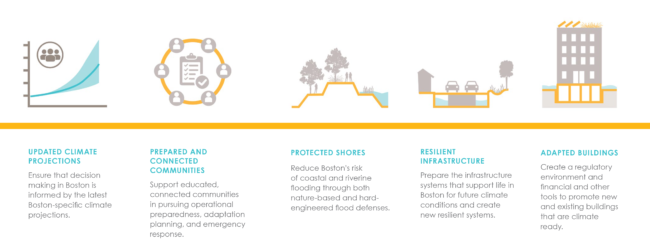
At HR&A, Phillip Bush will manage multiple projects within HR&A’s resilience and community revitalization practices. Currently, he is leading Climate Ready Boston, a comprehensive climate change adaptation plan for the city and its regional systems, on behalf of the Green Ribbon Commission and the City of Boston. He is also engaged in the Rockefeller Foundation’s capacity building initiative and HUD’s National Disaster Resilience Competition, where he works with 40 state and local governments on the predevelopment of resilience projects. As part of HR&A’s DC office, Phillip is co-lead for a multi-disciplinary team working for the DC Housing Authority to develop a mixed-use and mixed-income redevelopment plan for Greenleaf, a 15-acre 493 unit public housing site located in Southwest DC.


“I was very familiar with the high quality of HR&A’s work from collaborating with them over the years. I am excited at the opportunity to join the growing DC office and resilience practice, and to work with some of the most experienced and capable practitioners in our field”
– Phillip Bush, Principal


Phillip joins HR&A from Enterprise Community Partners where he began as a Freddie Mac Fellow developing proposals in response to federal and local opportunities for community revitalization and supported the establishment of the National Community Stabilization Trust. Phillip had the opportunity to make impactful changes on the frontier of affordable housing, resiliency and community development. He identified and assessed affordable housing transactions, developed policy recommendations, awarded grants to innovative communities, developed financial structures to leverage private capital with public funding, and led teams that provided assistance to local governments and non-profit agencies.


For over thirty years, HR&A has provided strategic advisory services for some of the most complex neighborhood, downtown, campus, and regional development projects across North America and abroad. With the addition of Phillip Bush to the HR&A team, we look forward to continuing to support the economic development and public policy goals of our clients. He can be reached at pbush@hraadvisors.com.