
Housing in America: From Permission Problem to Math Problem
We sat down with Phillip Kash, a Partner at HR&A Advisors who leads the firm’s housing practice, to talk about what’s changed, what Maine has learned three years into its housing production law, and why almost nowhere in America is it anyone’s job to make sure enough homes get built.

For 20 years, the American housing debate was an argument over permission – who gets to build what, and where. That argument isn’t over. But it is no longer who or what decides whether homes get built. Now, cost drives the conversation.
You have been doing this work for two decades. What’s changed?
When I started, the phrase was “affordable housing” – subsidy for the people the market left behind. It was a niche issue mostly important to progressive advocates in coastal cities.
As the economy started to recover from the foreclosure crisis, the cost of homes in cities and towns across the country started rising far faster than incomes. Suddenly, housing affordability was a problem for middle-income people in almost every county in America. Then ‘housing affordability’ was on the lips of local elected officials across the country. The new solutions were focused on cutting land use restrictions to let the market sort it out and boosting tenants’ rights to protect them from market pressure.
Since COVID, we have entered a new period where even if you can get permission to build, it is not enough; land use restrictions are no longer the primary barrier. Cost is. The cost of materials, labor, insurance, and financing has risen far faster than home prices, to the point where costs often exceed what a home will sell or rent for. So, fewer homes are being built. And this isn’t just a problem for the middle class; it’s a problem for large employers, too. Whole regional economies are being undermined by housing shortages. I would say we have entered the ‘housing and the economy’ phase where housing costs are driving the economic competitiveness of regions and national challenges with inflation, which is why you now see governors and Congress talking about housing and what they are going to do to get more homes built.
Earlier this year I was in Brownsville, Texas, where the cost of laying a foundation has gone up $40,000, in a market where homes sell for under $300,000. That’s 15 percent of the price of a house, added to one step of construction, because the crews who knew how to pour foundations aren’t there to hire anymore.
Houston makes the point from the other direction. It is one of the most permissive places to build in America, and the city, the county, philanthropy, and the business community still came together to fund an affordability strategy – and brought us in to build it. They did that because Houston’s economic engine runs on a family with a modest income being able to own a home. It takes about $70,000 in income to afford a median-priced home there, against $131,000 in Miami and $210,000 in Los Angeles.
That advantage is under threat. In 2019, 27,000 Houston homes sold for under $250,000. Almost no major city outside Texas comes close to that. By 2024, it was 7,000. Nothing about land use changed. Materials, insurance, interest rates, and labor did.
Maine, Seattle, Houston – everywhere I am working right now, people can’t get their numbers to work. Material costs for new residential construction rose 42 percent between 2020 and 2025, against 7 percent over the six years before that. No zoning approval closes that gap.

Ask developers why projects stall and the answer is not permits. Among firms that hit delays last year, 83 percent pointed to economic feasibility. Permitting and professional services came in at 52 percent. Land use is no longer the primary obstacle. The cost to build is. The question for communities is no longer who gets to build where; it’s how do we get the homes we need built?
Maine is further along than anywhere else you work. What has it done, and what did the first year show?
Maine did the hard work to build a broad coalition in support of getting more homes built. The key pivot was connecting the state’s housing needs to the needs of businesses throughout all parts of the state. Maine Chamber of Commerce gave their full backing, and its argument centered on employers struggling to fill open positions and retain good employees. Take Bath Iron Works, for example: in one year the shipyard hired 24 workers and lost 22, because it could not house them.
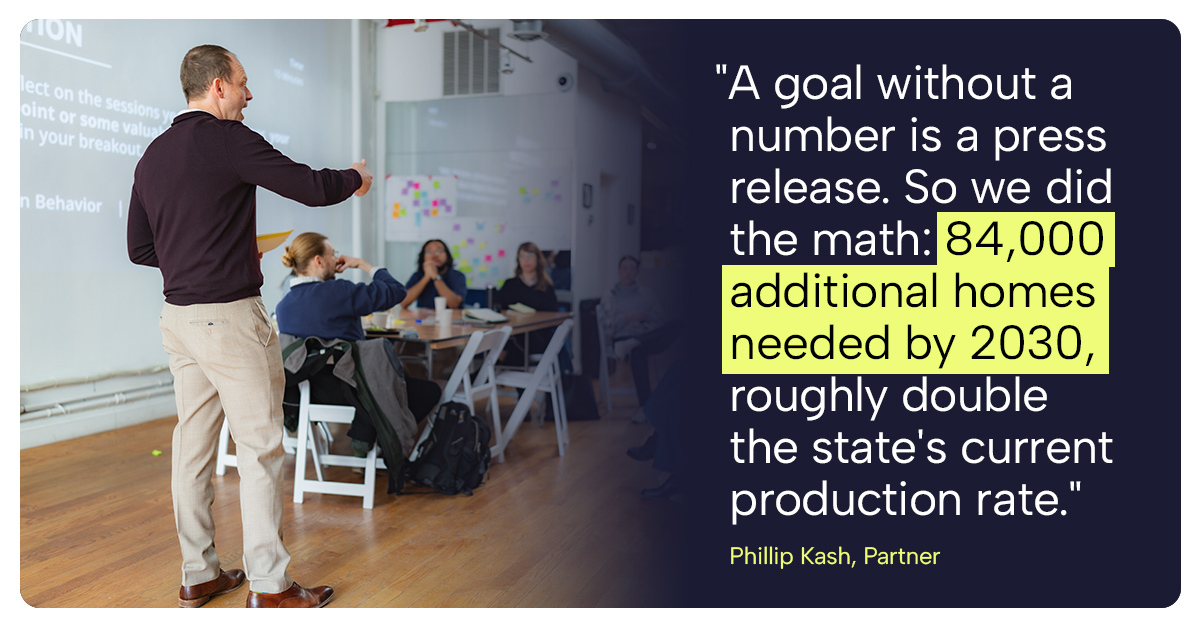
A goal without a number is a press release, so Maine had us do the math – 84,000 additional homes needed by 2030, roughly double the state’s rate. Then the harder part. Working with business, advocates, and reluctant towns, we found obstacles both unglamorous and specific: a labor force short by thousands that no zoning change touches, and towns without the staff to review what gets proposed. Capacity, it turns out, isn’t just about workers. It’s about whether the government can move at all. That is plumbing, and plumbing can be fixed. The bills passed with bipartisan support.
A target nobody tracks is just a number in a report, so every town above 4,000 residents now reports permits into one system. Year one: roughly 7,500 permitted against a target of 6,900. But the fastest growth was in ski and lake towns, not where the jobs are. Maine is producing, just not yet where the workforce needs it.
Is a housing shortage effectively a tax on competitiveness?
Housing is the number one expense for a household, which makes it the number one variable in where people can afford to work. When housing costs price workers out, employers can’t hire or retain the people they need. That’s a direct hit to a region’s competitiveness, not an abstract affordability problem.
Employers have stopped treating that as somebody else’s problem. Micron’s chip plant outside Syracuse, New York, will add 40,000 jobs, and alongside power and water they wanted to know where the houses would be. The agency that hired us was Empire State Development – economic development, not the housing agency.
In Durham, the Chamber of Commerce hired us first, not the city. In Richmond, it’s the Business Roundtable. In Houston, the business community is funding the study. I have made the moral case for this work my entire career. Housing is a human right. What I have never had before is the muscle of the business community pushing government to take action.
What separates the places that solve this from the ones that don’t?
Think about how government is organized. Someone in your city or your state signs off on whether new homes are structurally safe. Someone owns environmental quality. Someone owns traffic counts, schools, etc. No one is responsible for whether enough homes get built.
Planning boards look like they should do it, but their function is to stop what does not comply, not to produce homes. Compare that to schools: when enrollment grows, districts have to find seats. Housing is the one system where full is an acceptable answer.
That is starting to change. 
But the places that start treating housing as infrastructure will come out ahead.
In Puget Sound, the Regional Council, which has traditionally focused on transit infrastructure, is taking on housing. It released a tool that maps out all of the public land and allows developers, local governments, and the community to filter through it and see which sites are right to build more homes on.
There is no shortage of proposed solutions. How do you sort them?
By doing the math. There is no silver bullet, and almost nobody tests what a given policy would actually build.
That is the work we do: community meetings on one end, inter-creditor agreements on the other, about a billion dollars of mission-driven capital deployed in four years.
What work are you most excited about right now?
Right now, that is Washington State, where Steve and Connie Ballmer, through the Washington Family Fund, have committed to 10,000 homes aimed at pushing down what it costs to build. Every rental home we build will save a household $500 a month. For a family making $60,000, that is roughly 10 percent more in their pocket after tax.
Housing is good. It creates jobs and lets families build wealth. The places that come out ahead will be the ones that already decided this was somebody’s job.
Explore Phillip's Work

HR&A worked with the Maine Governor’s Office of Policy Innovation to develop a study to understand housing needs and deficits along with their impacts on Maine’s economy. Our study found that 76,400–84,300 new homes need to be built within the next 7 years to maintain Maine’s economic growth.
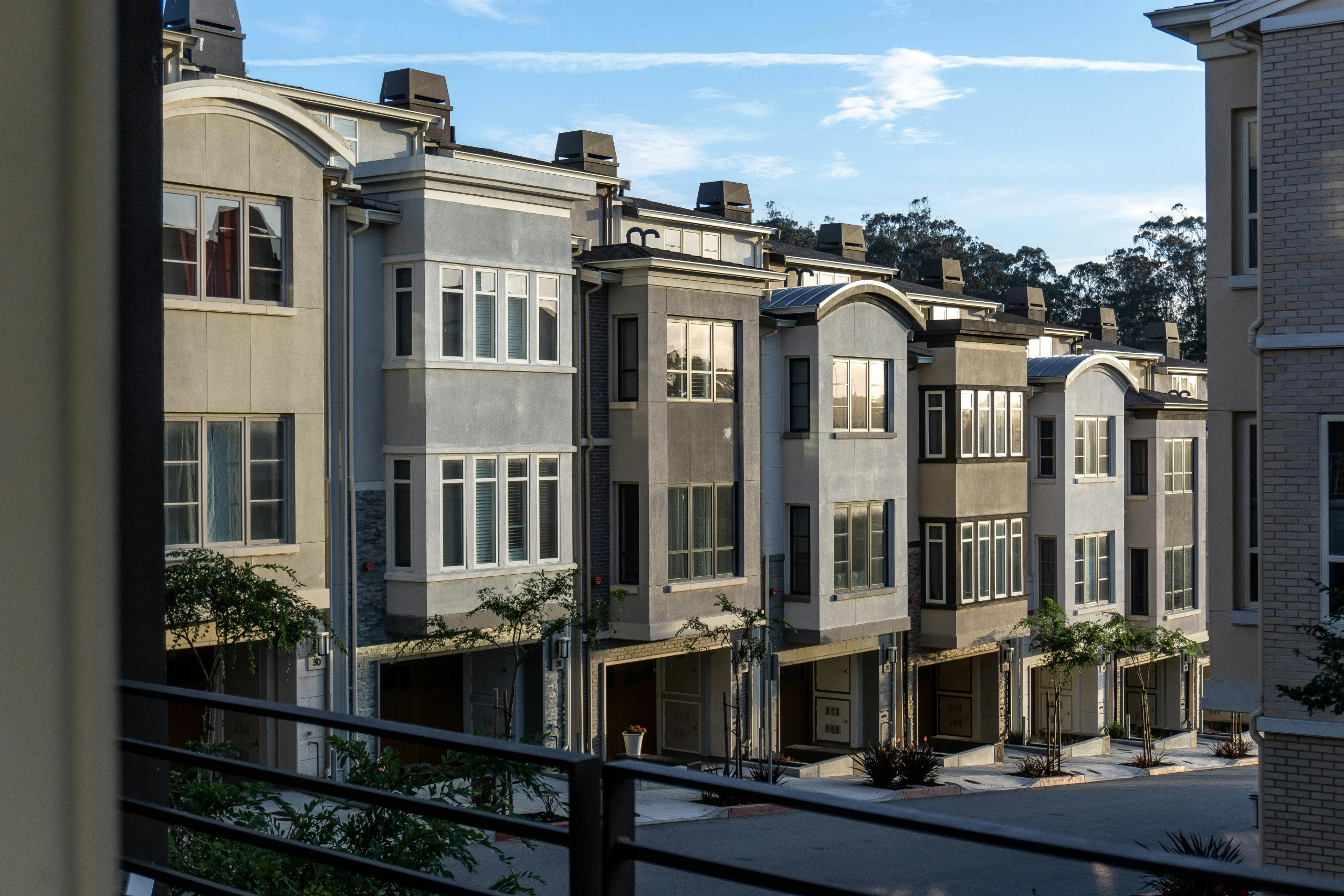
HR&A is supporting program design and implementation of Amazon's $2 billion Housing Fund, which has included negotiation and underwriting for over 9,000 affordable homes in the Washington DC area.

In 2024, Los Angeles County voters approved Measure A, a historic half-cent sales tax generating over $380 million annually for affordable housing and homelessness prevention. HR&A developed the inaugural Expenditure Plan and Regional Coordination Plan for the Los Angeles County Affordable Housing Solutions Agency (LACAHSA), creating frameworks that enable 13 regional agencies to deploy this permanent funding source while maintaining regional alignment toward the goal of producing 9,000 new affordable homes over the next five years.
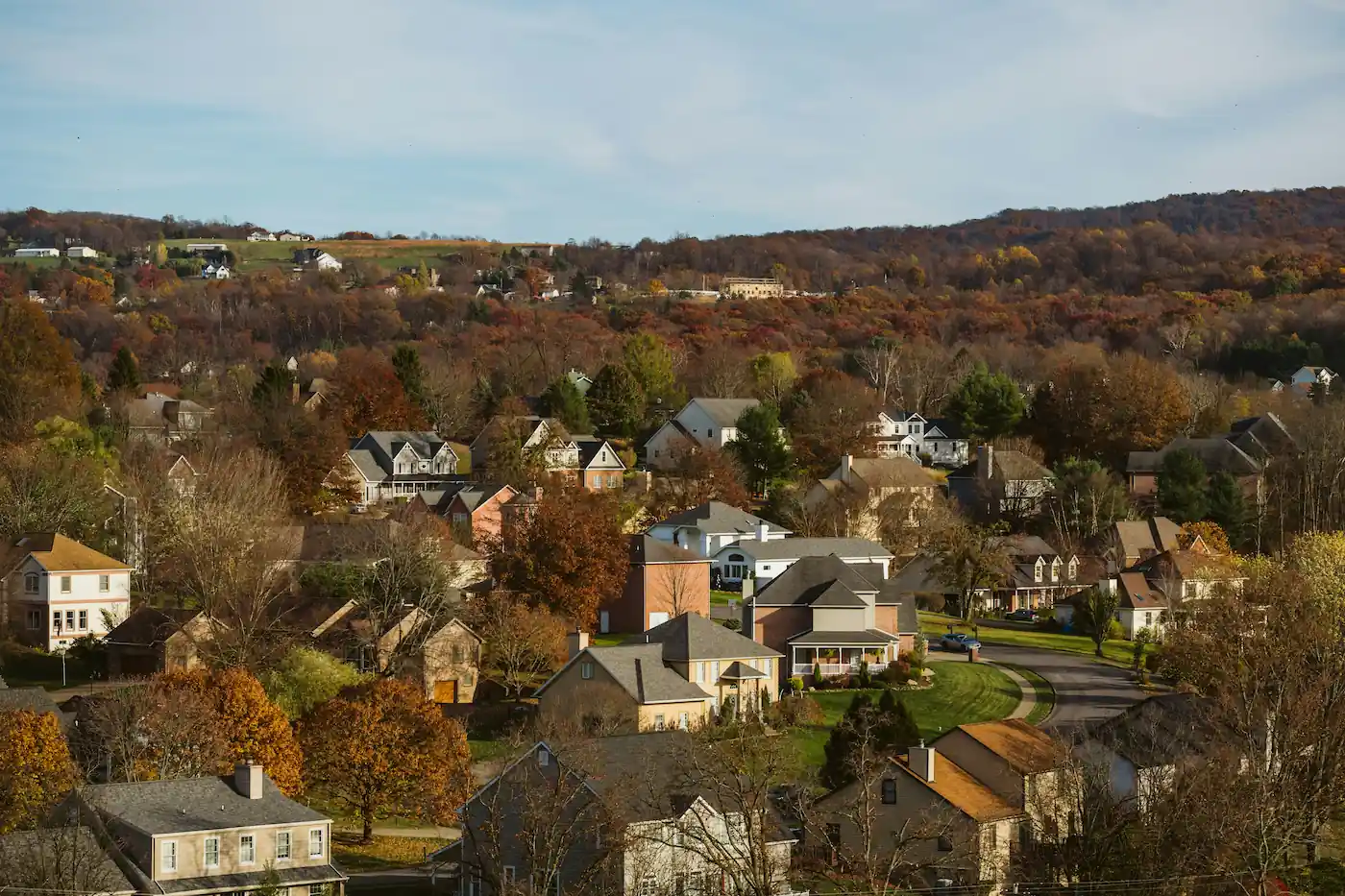
HR&A prepared the Syracuse region to absorb housing demand from Micron's $100 billion chip plant—the largest private investment in New York State history—through comprehensive market analysis across six counties that identified optimal growth areas and recommended strategies ensuring this transformative investment strengthens communities rather than creating displacement.
