DC in Motion: A Region in Transition

Federal policy changes and local market developments have made it clear that the Greater Washington Region is at a transition point. In addition, Election Day has brought a wave of new leadership to the region, including DC Mayor-Elect Janeese Lewis George and Montgomery County Executive-Elect Will Jawando, among others. A moment like this gives Greater Washington an opportunity to reflect on how it charts its path forward: rethinking economic development to reposition the economy and overcome budget challenges, investing in transit that connects people to opportunity, constructing housing that meets regional demand, and jumpstarting generational projects that position it for the future.
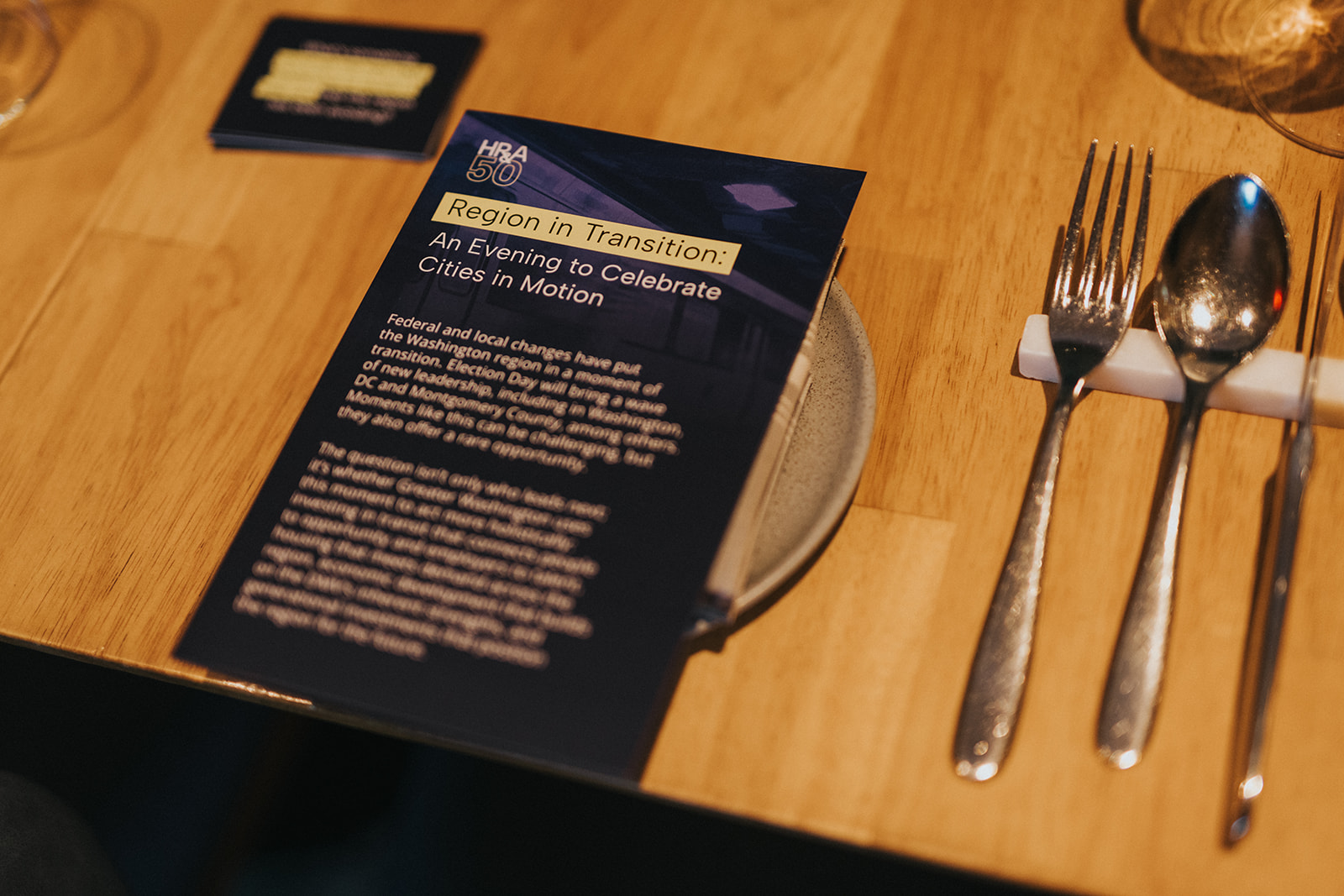
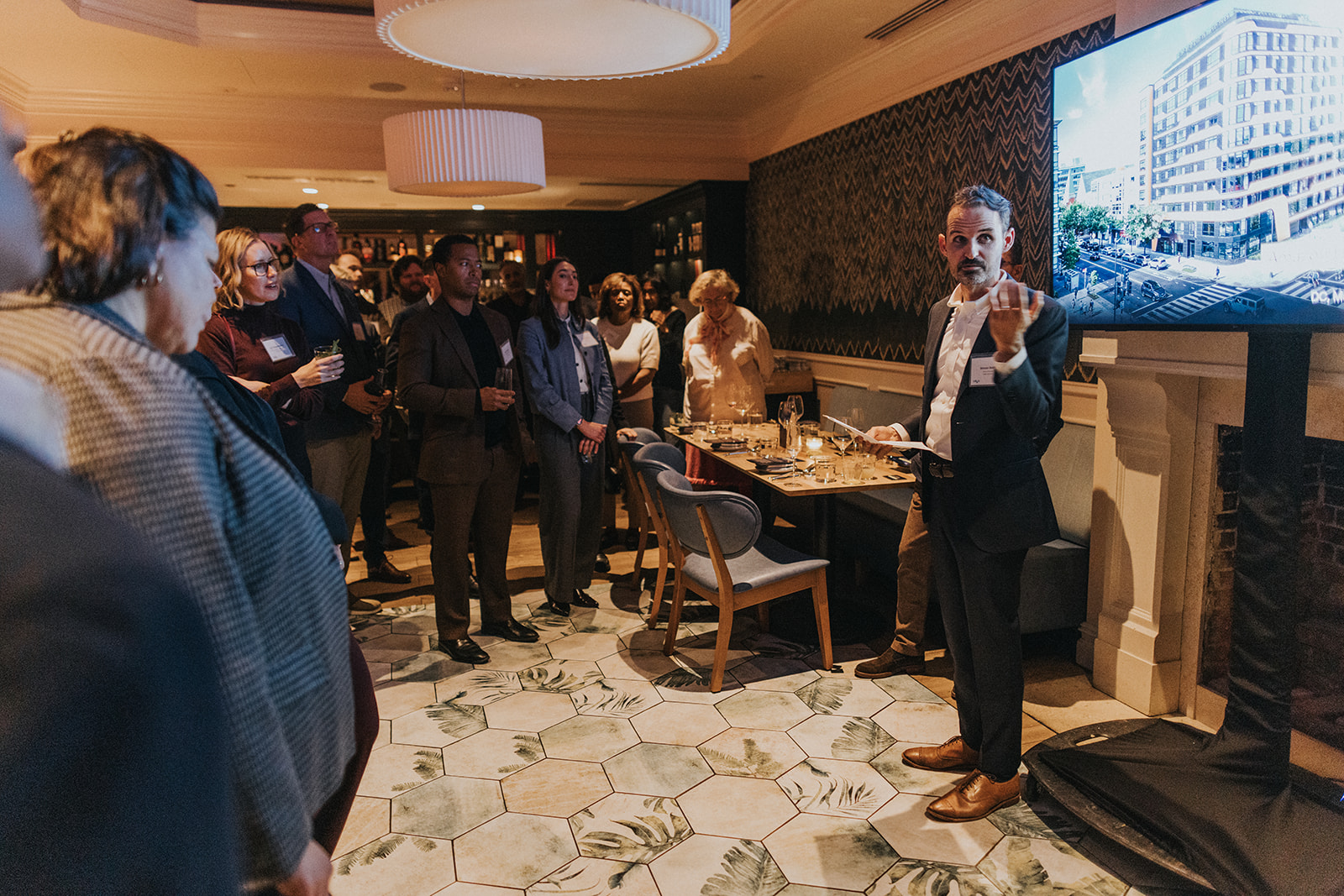
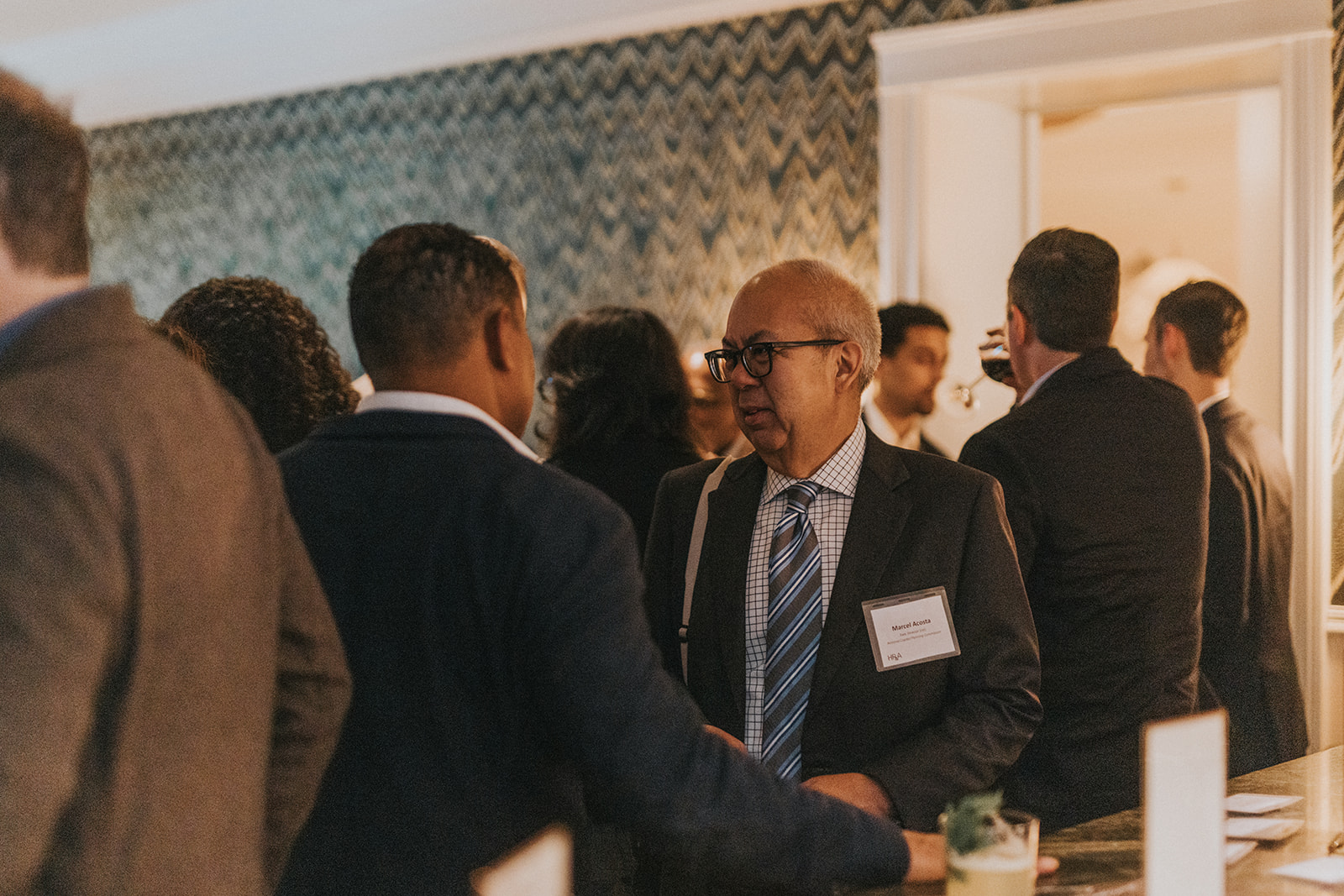
On November 2nd, the night before the election, HR&A hosted a dinner at Moon Rabbit in Washington, DC, for leaders from across the region. This was part of our Cities in Motion event series, marking 50 years of problem-solving with our clients. Leaders from local government, transit agencies, housing nonprofits, philanthropy, civic organizations, financial institutions, and real estate joined us to discuss how the region can capitalize on this moment.
The Greater Washington Region is central to HR&A’s story, and our work here began well before we opened our DC office in 2012. We coordinated the planning team behind the Anacostia Waterfront Framework Plan and led planning for Capitol Riverfront, which has since drawn more than $8 billion in private investment. Today, our work reaches across the region, including the Blue Line Corridor Vision and Implementation in Prince George’s County, which has helped secure more than $450 million in state funding and bonding capacity; a Housing Needs Assessment, Economic Recovery, and Parks and Recreation Funding for Fairfax County; WMATA’s Joint Development Program Strategy and Affordable Housing Policy Analysis; and the New Pennsylvania Avenue Plan, alongside David Rubin Land Collective. Since 2020, we have also helped Amazon design and implement its $2 billion Housing Equity Fund, including underwriting for more than 9,000 affordable homes in the Greater Washington Region.
We asked our guests to look ahead. Here are the three questions that shaped the night:

Adapting to a New Normal Will Take Regional Coordination
Asked what change in the region they did not see coming over the past 10 years, guests set aside the improbable return of the Washington Commanders to DC to focus on the abrupt reduction in federal civil service positions and its destructive effects on the region’s housing market, economy, and public realm. The federal government has long been the region’s stabilizing force. With that anchor shifting, the region must adapt to a new normal. This makes regional economic coordination more important. Guests argued that rather than compete as they sometimes do, Virginia, DC, and Maryland should work together to market the region to international investors, attract new industries, develop the workforce jointly, build affordable housing, and secure a sustainable funding strategy for Metro. This may also involve synthesizing and rethinking the roles of local and regional economic development organizations to reduce overlaps and fill gaps in mission.
The Next Generational Investment Concerns Land Already in Public Hands
Asked what generational investment the region risks missing over the next 50 years, guests pointed to excess federal properties, particularly in Southwest DC, where there is opportunity to create a new mixed-use neighborhood across 230 acres south of the National Mall. The transformation of Southeast Federal Center into the Capitol Riverfront neighborhood—begun a generation ago—offers valuable lessons and a precedent for the transformation and redevelopment of former federal property into an active and vibrant neighborhood.
Guests also saw opportunities to better engage the water, such as in the plans for development of Poplar Point. Priorities could include creating stronger connections between separate waterfront investments and promoting a healthier waterfront, starting with swimmable rivers.
Finally, guests noted that other catalytic projects involving public land include Union Station and Pennsylvania Avenue, both of which are currently in the planning stages.
Year One Should Focus on Housing, Transit, and the Public Realm
Housing
Mayor-Elect Lewis George has committed to building 72,000 new homes in five years. Guests observed that while 72,000 new homes is a “moonshot,” getting close will require addressing policy and regulatory barriers that have inhibited new investment in housing and are holding back both production and preservation. Meeting the goal would require a buildout to proceed at twice the pace of the new home building activity that occurred in the District between 2019 and 2025: a time when local and national macroeconomic conditions were better for the region’s housing development. Executing on this bold goal will require adjustments to the city’s housing development processes and policies, and guests anticipated challenges in finding overlap between the adjustments acceptable to different groups within the Mayor-Elect’s coalition, such as tenant advocates, developers, and housing providers. But one of the most practical—and implementable—adjustments is bringing housing legal processes back to the courtroom, since deals are made more frequently when people are able to interact in person: there is no 3rd space for compromise after a Zoom call.
Transit
While DC, Maryland, and Virginia have taken temporary measures to address current Metro operations, Metro faces a significant funding gap starting in fiscal year 2029 that is already generating service pressures. Metro continues to lack a sustainable, permanent dedicated revenue source, which will require broad political consensus across the jurisdictions in which it operates. Beyond “year one” needs, there is also opportunity to rethink how transit usage and commuting patterns have changed across the region since COVID. This could include leveraging regional rail to improve east-west connectivity across DC instead of solely as a means of transit into and out of the regional core.
Public Realm
Guests urged Washington, DC, to address its lack of “third places,” which would create a more vibrant public realm and spur investment. Many of the city’s parks and cultural spaces feel expensive, elite, and distinctly federal. One contributing factor is that nearly 90% of DC’s open space falls under federal jurisdiction, and the National Park Service (NPS) alone manages roughly three-quarters of the city’s parkland. Much of it is small, neighborhood-serving land that never fit the agency’s national mission. The result is fragmented management, unclear accountability, and parks that don’t always meet residents’ needs.
Guests argued that DC needs new monuments less than it needs third places that better serve residents and help the economy flourish. Building Tomorrow’s Parks, the newly released recommendations of the DC Neighborhood Parks Task Force, lays out a practical path:
- Transfer locally serving parks from NPS to the District;
- Build DC’s capacity to plan, manage, and coordinate its parks;
- Expand cost recovery while keeping everyday access free;
- Support community stewardship of small neighborhood parks.
The evening closed with remarks from Nina Albert, DC’s Deputy Mayor for Planning and Economic Development and a longtime HR&A client and collaborator, who said that “the trust that HR&A has built with Washington, DC, and other cities is unparalleled.” We are grateful for that trust and look forward to continued partnership as the Greater Washington Region moves forward.
Thank you to everyone who joined us for this conversation, and to Moon Rabbit for hosting us.