Getting Hard Things Done in California: a Cities in Motion Event

California has never been short on ambition. But ambition without results leaves communities behind, and right now, communities across the state are navigating compounding challenges — aging infrastructure, a housing crisis, climate risk, a challenging job market, and an economy in flux.
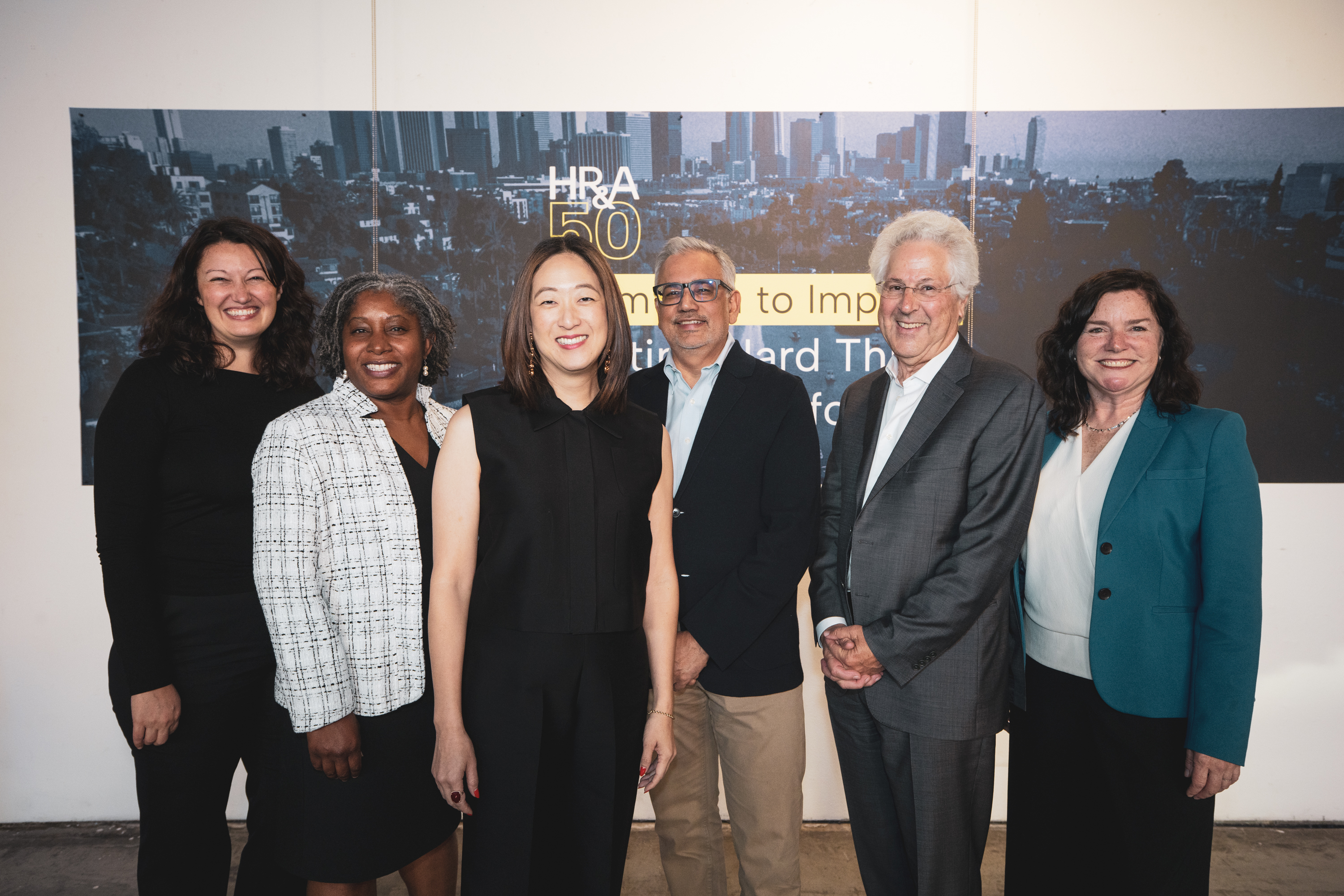
What does it actually take to get hard things done in California? On June 18, HR&A Advisors hosted an intimate dinner conversation at the Southern California Institute of Architecture (SCI-Arc) with people who know the stakes and have a track record of making change happen.
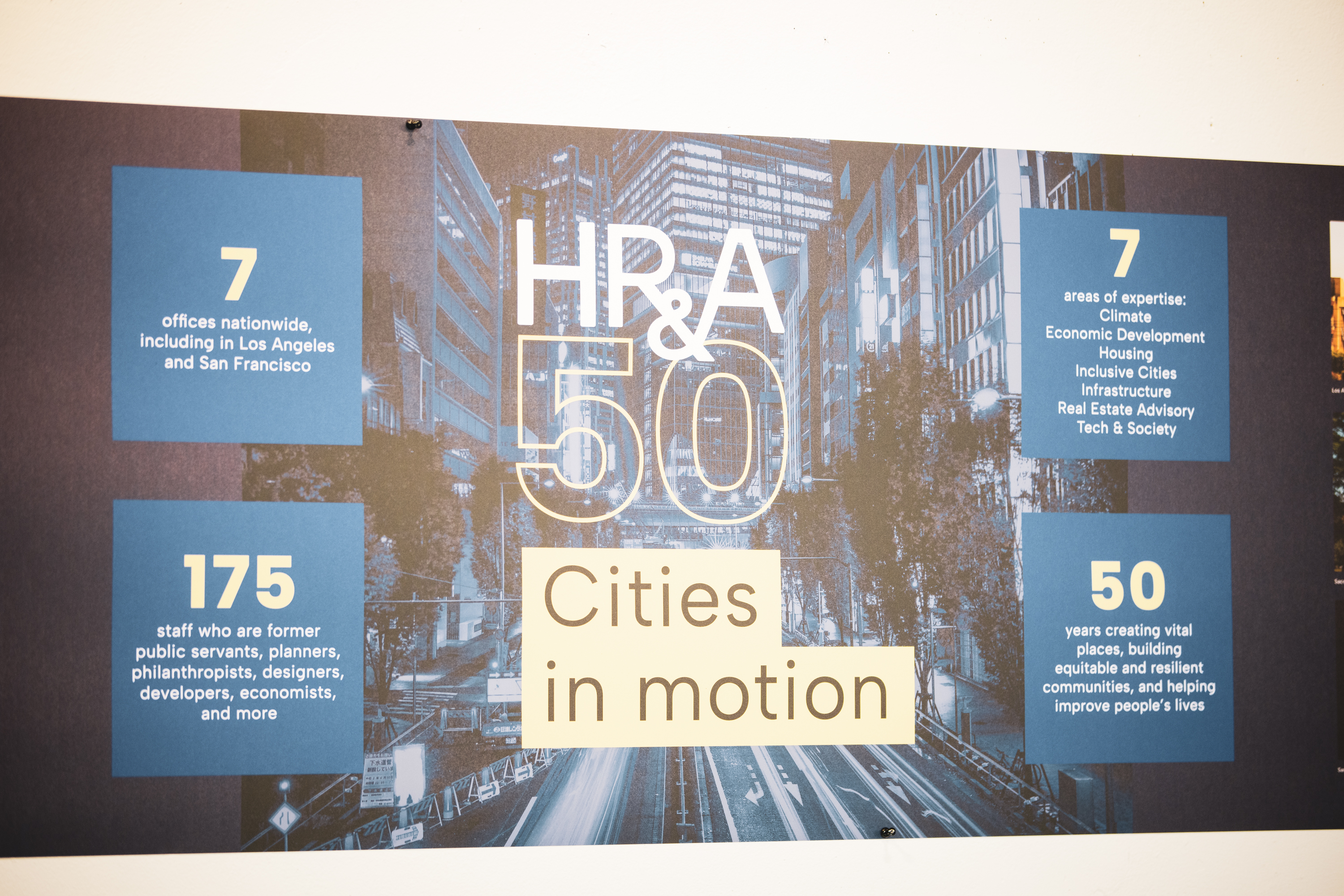
This event was part of HR&A’s Cities in Motion campaign, celebrating five decades of problem-solving for cities.
What Does It Actually Take to Get Hard Things Done in California?
We spent the evening digging into some big questions. Here are the three questions that resonated most across the room.

The conversations yielded a range of insights – here are a few that rose to the top:
- The Infrastructure Already Exists: California’s most ambitious cities aren’t waiting for new resources — they’re finding ways to make existing ones work harder. Consider Los Angeles’s network of more than 200,000 streetlights: already being upgraded by the Los Angeles Bureau of Street Lighting to support EV charging and air quality monitoring, and now potentially a seismic detection system, using fiber optic cables to sense ground vibrations in real time. HR&A is helping explore that possibility. It’s a small example of a big idea: that the infrastructure already woven into our cities — lights, pipes, cables, curbs — could be the platform for the next generation of climate, safety, and equity investments.
- California Is Educating Its Workforce and Then Exporting It: California spends billions producing some of the world’s most talented graduates — and then loses them to states where they can afford to live. The culprit isn’t a lack of affordable housing programs; it’s a gap in who those programs serve. Deeply subsidized affordable housing reaches the lowest-income households. Market-rate development serves those who can compete. Everyone in between — young professionals, working families, teachers, nurses, skilled tradespeople — is left without options. The missing middle: modest multifamily, townhomes, and small-lot housing that once housed the backbone of California’s economy, has been largely squeezed out. A State-capitalized initiative targeting missing middle and workforce housing production could close that gap directly. The moment is ripe: a new Governor, growing bipartisan recognition that housing is an economic issue, and a market that won’t self-correct. Done right, this could be a defining early move for California’s new administration — and a national model for states serious about competing for talent.
- California Doesn’t Have a Land Problem. It Has a Data Problem: California’s public agencies are sitting on one of the state’s most underleveraged assets: land. But turning public land into a public benefit is harder than it sounds. Agencies often lack a clear picture of what they own, what it’s worth, and what encumbrances stand between a parcel and its potential. HR&A helped the Los Angeles County Metropolitan Transportation Authority (LA Metro) do exactly this: build a functional database of real estate holdings, assessing the value of surplus land, and cutting through coordination challenges. The result is a clearer map of opportunity — and a faster path from asset to impact.
Gallery